
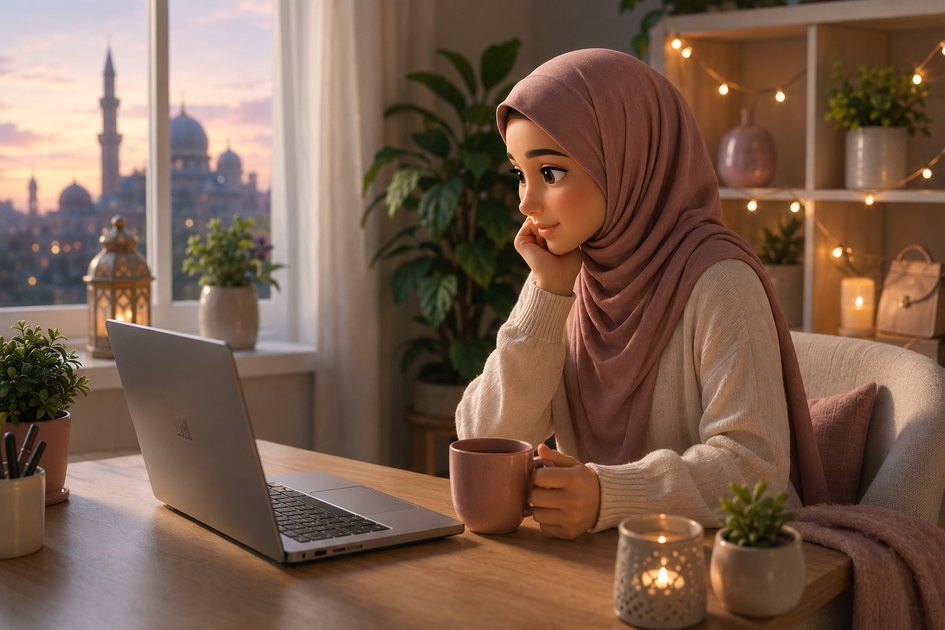
The day you say the shahada, many things can seem both bright and new: the prayers to learn, the Arabic words to hear, the habits to adjust, the questions you don't always dare to ask. For a sister who also lives online, this practical guide for a connected new Muslim woman starts from a simple need: to move forward in faith without feeling alone, exposed, or pressured.
Your conversion is not a public performance. It is an intimate journey between you and Allah, built with gentleness, knowledge, and good companions. The Prophet ﷺ said: "Actions are but by intentions." (Reported by al-Bukhari and Muslim.) Keep these words close to you: you don't need to do everything perfectly to start sincerely.
Start with the essentials, without trying to carry everything
When discovering Islam, the available content can be dizzying. One video recommends an opinion, another post defends a different one, and you sometimes end up believing you need to know everything before you can breathe. However, faith is better consolidated with simple foundations than under the weight of an endless list of perceived obligations.
Start by nourishing your connection with Allah: the shahada, the five prayers, a progressive understanding of the Quran, and learning the core values of Islam. Learn one thing, practice it regularly, then move forward. It is normal that the gestures of prayer take time, that reading Arabic is difficult, or that some questions remain open.
Allah says: "Allah does not burden a soul beyond that it can bear." (Quran, 2:286.) This verse is not an invitation to postpone faith. It is a reassuring reminder: Allah knows your story, your capabilities, and the silent effort that no one else sees.
Also seek serious sources. A qualified teacher, a welcoming mosque, a structured course, or a trusted sister can help you differentiate the foundations of the religion from cultural preferences. On topics that touch your personal practice, do not hesitate to ask for advice from a competent person. The internet can guide, but it does not always replace human and nuanced support.
A digital presence faithful to your values
Being connected does not contradict a life of faith. Your phone can become a useful tool to listen to a lecture, follow a course, find prayer times, exchange with sisters, or discover an event near you. The question is therefore not just: "Am I online?" It is also: "What does this presence nourish in me?"
A peaceful digital presence starts with a few concrete choices. Protect your identity when you don't know the people contacting you. Avoid sharing personal information, documents, your address, or details about a conversion you don't wish to make public too quickly. Discretion is not fear: it is a form of respect for your safety and privacy.
You can also clean up your feed. Keep the accounts that teach you with kindness, inspire you without making you feel guilty, and respect the diversity of journeys. Distance yourself from content that turns every religious topic into an aggressive debate, pushes you to compare your appearance, or claims to judge your faith in a few seconds.
Sometimes you have to accept an imperfect balance. Some sisters enjoy documenting their journey to find support; others prefer to keep it entirely private. Both choices can be legitimate. Ask yourself what preserves your peace, your safety, and your sincerity. You have no obligation to tell your story for it to be real.
Before posting, ask three simple questions
Before sharing a photo, a reflection, or religious information, take a short moment to ask yourself if it is useful, if it respects your modesty, and if it protects the people involved. This pause also helps avoid relaying unverified religious speech.
When a hadith or verse circulates in an image, check its reference before sharing it. A generous intention is not always enough to guarantee the accuracy of content. If in doubt, prefer silence or simply state what you know for certain.
Finding a sisterhood that doesn't ask you to play a role
Conversion can create a disconnect with your surroundings. Some loved ones will be curious, others worried, and still others will not immediately understand your new milestones. In these moments, meeting Muslim women who can listen without making you feel "behind" is precious.
A good sisterhood does not ask you to adopt a single accent, culture, or style to be accepted. It allows you to ask practical questions - about ablutions, Ramadan, halal food, or prayer at work - without ridiculing you. It also knows how to say "I don't know" when necessary.
Look for women-only spaces, moderated and attentive to confidentiality. The quality of a group is measured less by its number of members than by the way its participants speak to each other. A safe place does not trivialize mockery, pressure, or inappropriate solicitations.
Ukhti was designed in this spirit: a private and benevolent space where Muslim women can meet, discover events, and access resources or halal discoveries aligned with their values. The Ukhti registration page can be a starting point if you wish to build connections in an environment designed for sisters.
Making room for faith in an already full life
You don't need to disrupt every single day all at once. If you are a student, employee, mother, entrepreneur, or job seeker, organizing your practice may require very concrete adjustments. Prepare a small clean corner to pray, add prayer times to your schedule, and keep something to perform your ablutions when possible.
Ramadan, family meals, professional invitations, or travel will sometimes require anticipation. It can be helpful to plan a halal option, simply explain your needs, or find a quiet place to pray. But it is not necessary to constantly justify yourself. Your faith deserves to be lived with dignity, not defended in every conversation.
If you wear or are considering wearing the hijab, also give yourself time to think and prepare. For some women, this step is immediate; for others, it is part of a longer journey. Avoid injunctions from people who know neither your family context, your safety, nor your heart. Rather, seek reliable knowledge and support that brings you closer to Allah without crushing you.
Accepting the more fragile days
There may be days when a prayer is difficult, when loneliness returns, when you feel less sure of yourself. These moments do not make your commitment empty. They are part of any spiritual life. Return to a simple action: make an invocation, read a few verses with their meaning, talk to a trusted sister, or ask Allah to strengthen you.
Do not turn social networks into a tribunal of your progress. Your relationship with Allah is not measured by the perfection of a post, the speed of your learning, or the gaze of strangers. It is cultivated in intentions, sincere returns, and repeated small efforts.
Move forward with tenderness towards yourself. Keep what protects you, get closer to the sisters who uplift you, and remember that you have the right to learn at your own pace. Every step taken with sincerity can become a door to more peace, knowledge, and belonging.